


Fillet Weld Grinders

Get inspired with expondo blog


Fillet weld grinders for clean, consistent weld finishing
Fillet weld grinders are designed to help you refine weld beads and blend joints with confidence, especially where two surfaces meet at a right angle. Whether you are dressing internal corners on frames, tidying up structural fillets, or preparing a joint for coating, these tools support controlled material removal so your work looks professional and performs as intended.
In fabrication and repair, the challenge is rarely just “grinding it down”; it is achieving a smooth transition without gouging the parent metal or weakening the weld. Fillet weld grinders excel here thanks to their compact working end and practical handling, helping you reach awkward corners and follow the line of the weld. This makes them a strong choice for metal workshops, site teams, and anyone who values repeatability across multiple parts.
From deburring after welding to reducing spatter and high spots, the right setup lets you work efficiently while keeping the finish under control. If your workshop also relies on more general-purpose tools for cutting, shaping, and surface clean-up, you can complement your kit with grinders for broader tasks, while keeping a dedicated fillet weld solution ready for corner work where precision matters most.
Accessories for fillet weld grinders: polishing discs and finishing media
A great finish depends as much on the abrasive as it does on the tool. That is why accessories are a central part of this category, with practical consumables that help you move from stock removal to surface refinement in a controlled sequence. By stepping through different grades, you can reduce scratch depth, improve visual quality, and prepare metal for painting, powder coating, or further fabrication.
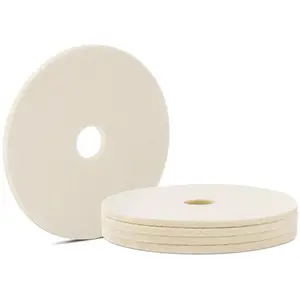
A representative highlight is a set of 5 polishing discs, ideal for progressive finishing when you want a cleaner, more uniform surface after initial grinding. These discs are well suited to blending welds, smoothing transitions, and bringing a more refined sheen to metalwork without the harsh marks that can be left by coarse abrasives alone. Keeping a small set on hand also helps you maintain consistent results across jobs, from one-off repairs to repetitive production work.
For best results, match your polishing discs to the material and the outcome you need. On mild steel, you may prioritise rapid blending and coating readiness; on stainless, you will often aim for a smoother, more cosmetic finish. In both cases, consistent pressure, the right speed, and a sensible progression of abrasives will help you achieve a professional look while reducing rework.
Fillet weld finishing is often part of a wider surface-prep routine. When you need to refine larger, flatter areas adjacent to the joint, orbital sanders can be a practical companion for achieving an even, swirl-reduced finish on panels and plates, while your fillet weld grinder remains focused on edges, corners, and tight transitions.
Choosing fillet weld grinders: power, control and workshop fit
Selecting the right fillet weld grinder is largely about balancing access, control, and productivity. Consider the working space around the weld, the material thickness, and how frequently you will be finishing joints. For regular fabrication, a tool that sits comfortably in the hand and supports steady guidance can make a noticeable difference to both speed and surface quality, particularly on long fillet runs or repetitive assemblies.
Power and speed control influence how confidently you can move between tasks such as knocking down proud welds, blending toes, and finishing with polishing media. A stable, predictable response is especially useful in corners where over-grinding can happen quickly. When paired with suitable discs, a well-chosen fillet weld grinder helps you maintain neat edges and consistent profiles, supporting both appearance and practical fit-up of mating parts.
Your working environment also matters. If you prefer pneumatic tools for their compact feel and straightforward maintenance, air grinders can integrate neatly into compressed-air workshops, offering a responsive option for detailed work and extended use. For many teams, keeping the right style of tool for the job improves workflow: a dedicated corner-capable grinder for fillet welds, and finishing discs ready to move straight into the final surface stage.
Finally, think about the complete process: rough shaping, controlled blending, and surface finishing. Stocking dependable consumables such as polishing discs alongside your fillet weld grinders ensures you can respond to different metals and finish requirements without delay. The result is a tidier weld line, a more uniform surface, and a workshop routine that feels efficient from the first pass to the final finish.