


Laboratory Power Supplies
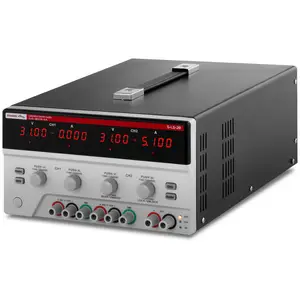

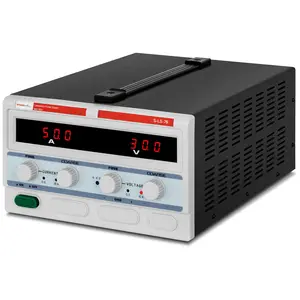
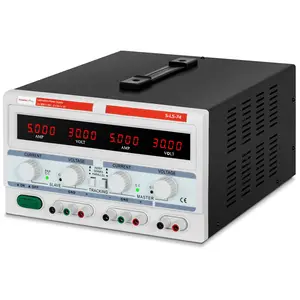
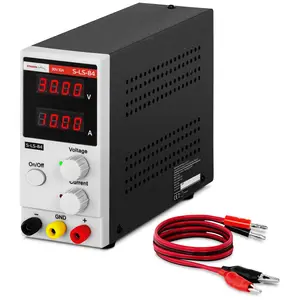
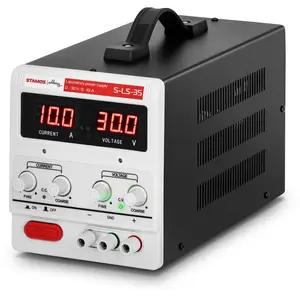
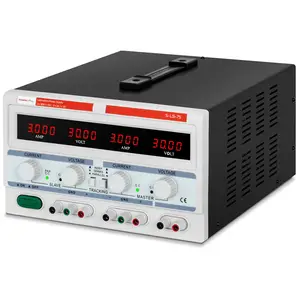
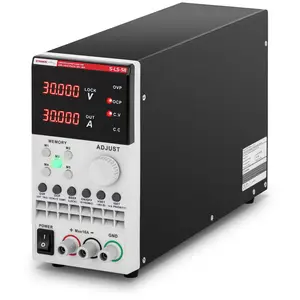
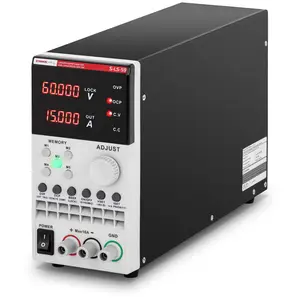
Dual Power Supply - 2x 0-30 V, 0-5 A DC, 550 W
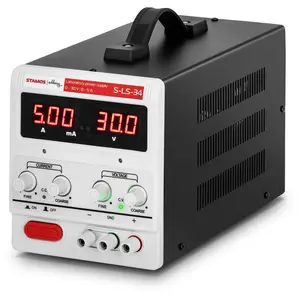
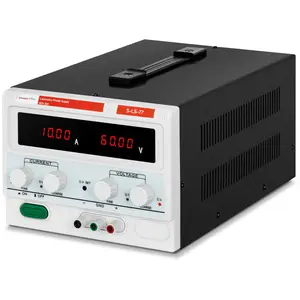
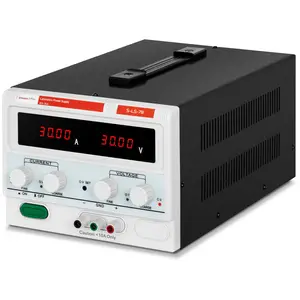
- First
- 1
- Last
Get inspired with the expondo blog





Laboratory power supplies for accurate, stable and repeatable results
Laboratory power supplies are the dependable backbone of any bench where precision matters. Whether you are validating a prototype, running a test sequence, teaching fundamentals of circuit behaviour, or powering delicate modules for calibration, the right supply gives you controlled DC output with the confidence that voltage and current will stay exactly where you set them. In this category you will find practical, lab-ready units designed for day-to-day work, offering clear readouts, stable regulation and straightforward controls that help you move quickly from setup to measurement.
For typical electronics tasks, an adjustable laboratory power supply is ideal for powering boards, sensors, microcontrollers and small motors while you observe real-world performance. Look for features such as constant voltage (CV) and constant current (CC) modes, fine adjustment for sensitive loads, and current limiting to prevent accidental damage during bring-up. Many models also include output protection and low-ripple performance to support clean measurements, making them well suited to troubleshooting, functional testing and educational demonstrations.
If you are equipping a broader workspace, laboratory power supplies also complement other essential laboratory devices by providing a controlled energy source for experiments, inspections and validation routines. A well-chosen unit simplifies your workflow: set your parameters, connect safely, monitor the output and repeat with consistent results—especially useful when documenting procedures or training multiple users on the same bench.
Bench power supply options built for everyday laboratory work
A bench power supply is a popular choice for labs and workshops because it balances versatility with a compact footprint. Designed to sit neatly on a worktop, these units typically provide a wide adjustable range, intuitive front-panel operation and easy-to-read digital displays. For many applications, the combination of stable output and responsive current limiting is what turns a bench power supply into an everyday problem-solver—helping you power a circuit, observe current draw, identify faults and confirm behaviour under load without needing complex setup.
Bench-focused models often shine when you need rapid changes between projects. Clear voltage and current presentation supports quick checks, while robust build quality suits frequent use. Depending on your setup, a supply with fine and coarse adjustment makes it easier to dial in exact values; meanwhile, protection features such as overload and short-circuit safeguards add reassurance when exploring unknown boards or newly assembled prototypes. If your work involves repetitive steps, choosing a model that feels comfortable to operate for long periods can make a noticeable difference to productivity and user confidence.
Power supplies can also be part of wider lab routines where controlled electrical input is needed alongside mixing, heating or sample preparation. For example, when a workspace uses electric stirrers, a reliable bench setup and tidy cable management help keep the area efficient and safe. Even when the power supply is not directly driving those devices, the same principles apply: stable power, clear monitoring and reliable operation support a more predictable workflow overall.
Dual power supply solutions and practical features to look for
When your projects demand more flexibility, a dual power supply can be the right answer. Dual outputs let you power two circuits independently, run positive and negative rails for analogue designs, or test a main board and peripheral at the same time—without constantly swapping leads or reconfiguring a single channel. This approach is especially helpful for op-amp circuits, audio stages, sensor conditioning and other designs where symmetric supplies improve performance or simplify testing.
As you choose a unit, consider how you work and what you measure. A clear, stable display makes it easy to monitor small changes during experimentation. Smooth adjustment supports fine control for sensitive electronics, while reliable regulation helps ensure that what you observe is the circuit behaviour—not the supply drifting. Protective functions are equally valuable: current limiting, thermal protection and short-circuit protection can prevent minor mistakes from becoming costly failures. If you frequently connect different loads, sturdy terminals and well-spaced controls improve both convenience and safety at the bench.
To keep your setup organised, it is also worth pairing your power supply with the right leads, connectors and bench essentials. The correct consumables help reduce contact resistance, minimise measurement errors and speed up changeovers between tasks. You can round out your workstation with purpose-made laboratory accessories that support cleaner wiring, safer handling and a more professional working environment. With a laboratory power supply or dual unit at the centre of the bench, you gain dependable control over your experiments and tests—so you can focus on results, repeatability and quality in every project.