


Welding Wires
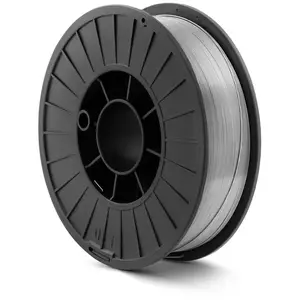

Flux Core Wire - alloy steel - E71T-GS - 1.0 mm - 5 kg
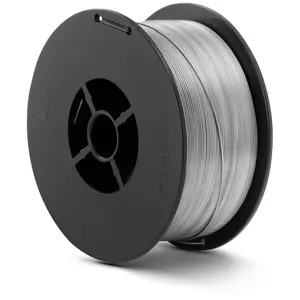
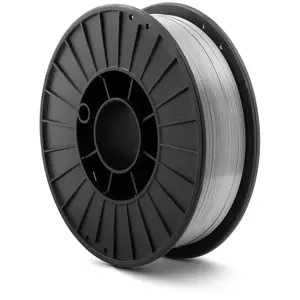
Flux Core Welding Wire - alloy steel - E71T-GS - 0.8 mm - 5 kg
- First
- 1
- Last
Get inspired with expondo blog

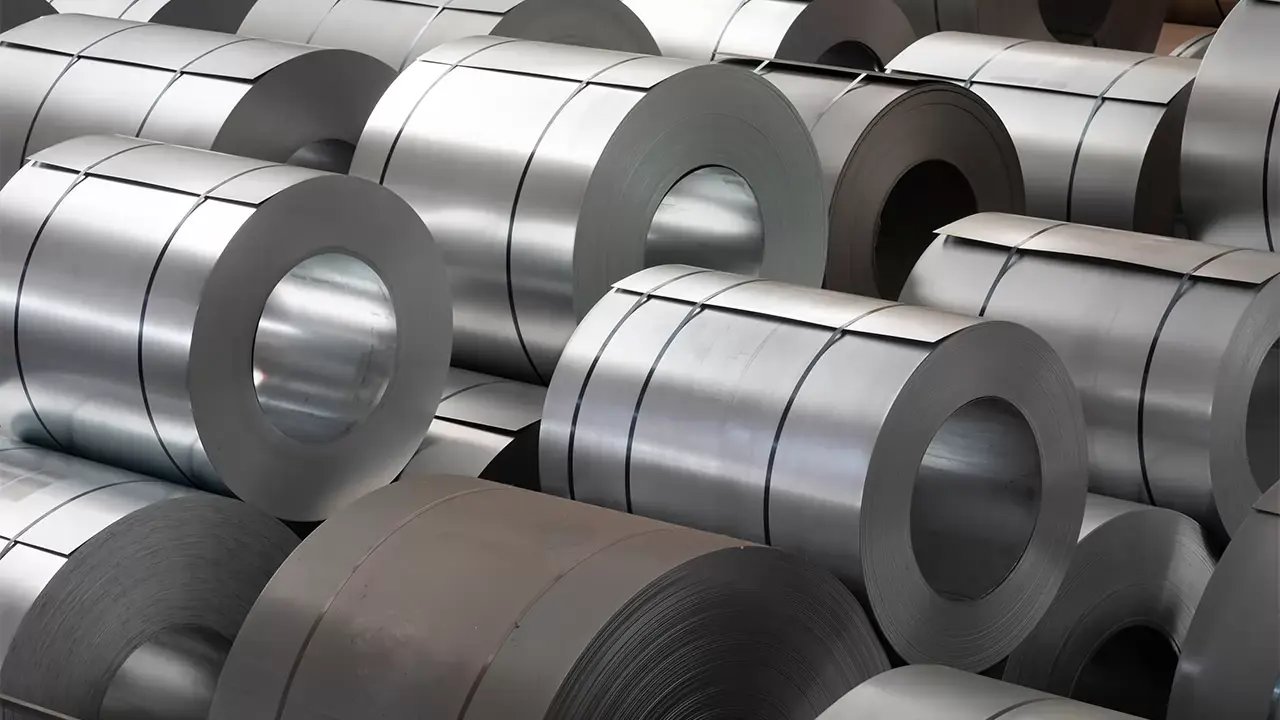
Welding wires for reliable MIG/MAG and flux-cored welding
The right welding wire has a direct effect on arc stability, weld quality, penetration and how efficiently you can complete a job. At expondo, you can find welding wires for different materials and working conditions, including alloy steel and stainless steel welding wire, self-shielding flux-cored options and solid MIG wire for gas-shielded welding.
The range from Stamos Welding Group covers several commonly used classifications, including E71T-GS, E308T0-3, ER70S-6 and ER308LSi. This makes it easier to match your consumable to the base material and welding process rather than choosing on diameter alone. Options include 0.8 mm and 1.0 mm wire as well as 1 kg and 5 kg spools and economical 3 × 5 kg sets for longer or more frequent welding work.
Whether you are repairing steel structures, fabricating components, working on vehicle bodywork or joining corrosion-resistant stainless steel, selecting the appropriate wire helps you achieve more predictable results from your MIG/MAG equipment .
Flux core welding wire for gasless MIG/MAG work
Flux core welding wire is particularly useful when you want to weld without carrying a separate shielding-gas cylinder. The flux within the tubular wire creates the protection required around the weld pool during welding, making self-shielding wire a practical option for repairs, site work and other situations where external shielding gas would be inconvenient.
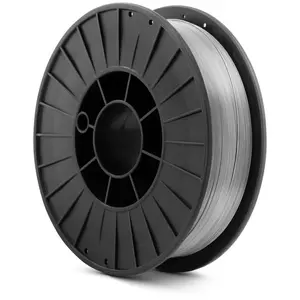
The expondo range includes E71T-GS flux cored welding wire made from alloy steel in both 0.8 mm and 1.0 mm diameters. These 5 kg spools are designed for MIG/MAG welding without additional shielding gas and are suitable for applications involving alloyed and low-alloy steels. Typical uses include car body repairs, tanks, steel structures and general maintenance or fabrication work.
For stainless steel, E308T0-3 flux core welding wire is available in 0.8 mm diameter. Depending on how much material you need, you can choose between a compact 1 kg spool and a larger 5 kg version. This self-shielding stainless wire is designed for welding without an additional gas supply, making it an attractive choice when portability and a simpler equipment setup matter.
The 1 kg E308T0-3 spool is also a convenient option for occasional stainless steel jobs or workshops that want to keep several different filler materials ready without buying a large quantity of each.
MIG welding wire for steel and stainless steel
When controlled workshop conditions and shielding gas are available, solid MIG welding wire provides a productive solution for continuous welding.
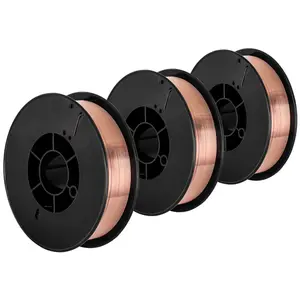
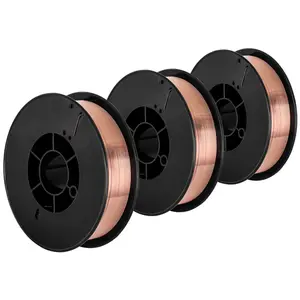
For unalloyed steels, expondo offers copper-plated ER70S-6 wire with a diameter of 1.0 mm. The copper plated welding wire is intended for gas-shielded MIG/MAG welding using an argon/CO2 mixture or CO2. Its formulation is designed to support stable arc behaviour and limited spatter, making it suitable for applications ranging from automotive and transport work to construction and general metal fabrication.
The ER70S-6 option is supplied as a 3 × 5 kg set, giving regular users 15 kg of wire while keeping it divided between manageable individual spools.
For corrosion-resistant materials, the range also includes ER308LSi stainless steel welding wire in 0.8 mm diameter, again supplied as three 5 kg spools. This austenitic MIG wire is intended for stabilised and non-stabilised chromium-nickel steels and is used with an appropriate shielding gas. Its applications include food-processing equipment, chemical-industry fabrication, pipes and boiler systems, where resistance to corrosion and heat can be particularly important.
Which welding wire should you choose?
Start with the metal you intend to weld and then consider your welding process, shielding method, machine compatibility and expected workload.
For alloy and low-alloy steel where you want to work without a separate shielding-gas supply, E71T-GS flux-cored wire is a practical choice. The 0.8 mm and 1.0 mm versions allow you to select a diameter compatible with your wire feeder and the requirements of the job.
For stainless steel welding without an external gas cylinder, the 0.8 mm E308T0-3 flux-cored option provides a gasless solution. If you are carrying out gas-shielded MIG/MAG welding on stainless CrNi steels instead, ER308LSi offers a solid-wire alternative.
For everyday gas-shielded MIG/MAG fabrication of unalloyed steel, the 1.0 mm ER70S-6 wire is the relevant choice within the expondo range.
Always check the wire classification against the base metal and welding procedure before starting work. The filler material should be compatible not only with the metal itself but also with the mechanical properties and corrosion resistance required from the finished joint.
Choosing between 0.8 mm and 1.0 mm welding wire
Wire diameter influences the settings and behaviour of your welding system. A 0.8 mm wire can provide precise control and is widely used across light and general fabrication work, while a 1.0 mm wire can be suitable when greater filler-metal deposition is useful.
However, diameter should never be considered in isolation. Check that your MIG/MAG welder, contact tip, feed rollers and liner are suitable for the selected wire size. Voltage, welding current and wire-feed speed must also be adjusted for the workpiece thickness, joint design and welding position.
The current expondo selection makes this decision straightforward: stainless E308T0-3 flux-cored wire and ER308LSi solid wire are available in 0.8 mm, E71T-GS flux core is offered in both 0.8 and 1.0 mm, and ER70S-6 solid steel MIG welding wire is available in 1.0 mm.
Spool dimensions matter too. Before ordering, check that your machine can accept the chosen spool and that the feeder is correctly configured for the wire diameter and wire type.
MIG, TIG and MMA filler materials – what is the difference?
Wire supplied continuously from a spool is primarily associated with MIG/MAG and flux-cored welding. In these processes, the machine automatically feeds the wire through the torch, where it acts as both the electrode and filler material.
TIG welding wire or TIG filler material is different because it is normally introduced manually into the weld pool while a separate non-consumable tungsten electrode maintains the arc. If your work requires other welding processes, expondo also offers welding rods as part of its wider range of welding consumables.
MMA welding uses coated stick electrodes rather than continuously fed welding wire. You can explore suitable mma welders or browse arc welders when stick welding is better suited to your work.
For workshops that use several processes, expondo's wider selection of welding machines makes it possible to build a setup around the materials, thicknesses and welding techniques you use most often.
Welding wires for workshops, fabrication and repair
Different users place different demands on welding consumables. A maintenance technician may value self-shielding wire because it reduces the equipment required for a repair, while a fabrication workshop may prefer larger solid-wire quantities for uninterrupted MIG/MAG production. Vehicle repairers, metalworkers, construction professionals and stainless-steel fabricators likewise need wire selected for their particular material and working environment.
That is why expondo's welding wire range includes both self-shielding and gas-shielded solutions rather than a single general-purpose product. Compact 1 kg stainless flux-core wire suits smaller jobs, 5 kg spools provide more capacity for regular use, and 3 × 5 kg solid-wire sets help reduce spool changes and keep busy workshops supplied.
For the best results, keep welding wire clean and dry and protect opened spools from moisture, dirt and workshop contamination. Smooth feeding and a clean wire surface help maintain a stable arc and reduce avoidable welding defects.
Choose your welding wire according to the material, classification, diameter, shielding requirements and spool size your equipment can accommodate. With alloy-steel and stainless steel welding wire, solid MIG welding wire and self-shielding flux core welding wire available in the category, you can select the consumable that best matches both your machine and the job at hand.