


Prisms

Get inspired with expondo blog




Prisms for Accurate Surveying and Precise Measurements
Prisms are essential accessories for professionals who require reliable and accurate results during surveying, construction, engineering, and technical measurement tasks. These precision components are designed to reflect measurement signals back to surveying instruments, allowing users to determine distances and positions with a high level of accuracy.
Whether you are preparing a construction site, checking the alignment of structures, monitoring movement, or completing detailed land measurements, a suitable prism can significantly improve the efficiency and reliability of your work. By providing a clear and stable reference point, surveying prisms help professionals collect consistent data and reduce the risk of measurement errors.
Modern surveying projects often require equipment that combines precision with practicality. Compact solutions, such as mini prisms, are especially useful when working in areas where access is limited or where equipment needs to be transported frequently. Their lightweight design makes them easy to install, adjust, and use alongside other professional instruments.
When used as part of a complete measurement setup, prisms support a wide range of applications. From initial planning and site preparation to final quality checks, they provide professionals with the confidence that every measurement is based on a dependable reference point.
What Is a Surveying Prism Used For?
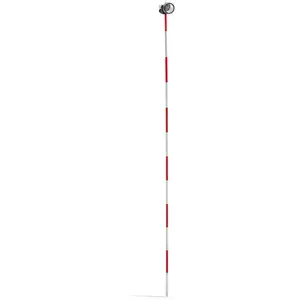
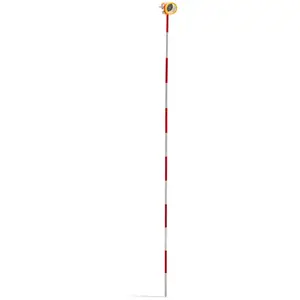
A surveying prism is a reflective target that works with precision instruments such as total stations and other optical measurement systems. During measurement, the instrument sends out a signal towards the prism, which reflects it back to the device. This allows the system to calculate accurate distances and locations.
Prisms are widely used in professional surveying because they provide a consistent target that can be identified repeatedly. This is particularly important when measurements need to be compared over time or when multiple reference points are required across a project area.
Typical applications include construction layout, land surveying, engineering measurements, deformation monitoring, and infrastructure projects. Surveyors may use prisms to establish exact positions, verify dimensions, or monitor whether a structure remains correctly aligned.
The main advantage of using a dedicated prism is accuracy. Unlike improvised targets, professional prisms are designed specifically to work with surveying instruments, helping users achieve reliable readings even during complex projects.
Mini Prisms for Flexible and Efficient Fieldwork
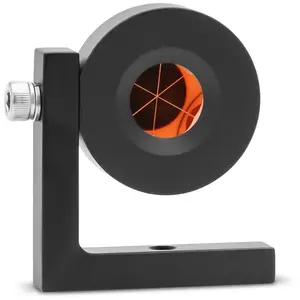
Mini prisms are a practical solution for professionals who need accurate measurements while maintaining flexibility and mobility. Their compact size makes them particularly useful in locations where larger reflectors may be difficult to position, such as narrow spaces, busy construction areas, or sites with limited access.
A mini prism can be installed close to important reference points, including walls, corners, structures, and boundaries. This makes it easier to complete detailed measurements without unnecessary equipment adjustments or complicated setups.
Portability is another important advantage. Surveyors and technicians often work across different locations during a single project, so lightweight equipment can help save time during transportation and installation. A compact prism can easily be stored with other essential tools and prepared quickly whenever precise measurements are needed.
Mini prisms are suitable for many professional applications, including building projects, technical inspections, and engineering tasks. Their combination of convenience and accuracy makes them a valuable addition to equipment collections used by surveying specialists and construction professionals.
The Role of Prisms in Construction and Engineering
Accurate measurement is one of the most important elements of successful construction and engineering work. Even small inaccuracies during the planning or installation stages can result in delays, additional expenses, or the need for costly corrections. Prisms help professionals maintain control over measurements and ensure that projects follow technical plans accurately.
On construction sites, prisms can support tasks such as setting out foundations, checking structural positioning, verifying alignment, and monitoring progress. They allow teams to compare real-world measurements with project specifications and identify potential issues at an early stage.
For civil engineering projects, precision is equally important. Roads, bridges, tunnels, and large-scale industrial structures all require careful positioning and ongoing measurement checks. Using reliable prisms together with suitable instruments allows engineers to maintain accuracy throughout every phase of development.
Prisms are also valuable for monitoring applications. In situations where movement or changes need to be detected, repeated measurements provide important information about the stability of structures and surrounding areas. This makes them useful for safety checks and long-term observation projects.
Choosing the Right Prism for Your Application
Selecting the correct prism depends on several factors, including the type of surveying work, the measurement instrument being used, and the conditions of the working environment. Considering these factors helps ensure that the chosen equipment provides the required level of performance.
One important factor is compatibility. The prism should be suitable for the instruments used in your workflow so that measurements can be completed efficiently. Professionals should also consider the size, mounting options, and visibility of the prism depending on where it will be used.
Mini prisms are often preferred for tasks requiring flexibility and easy handling, while other prism types may be more suitable for applications where specific measurement requirements must be met. The right choice depends on the individual needs of the project.
Durability is also essential. Surveying equipment is frequently used outdoors and may be exposed to dust, changing temperatures, moisture, and regular transportation. A well-designed prism can provide dependable performance even in demanding working conditions.
Many professionals combine prisms with other surveying equipment to create a complete setup that supports accurate measurements, efficient workflows, and reliable results across different types of projects.
Combining Prisms with Other Measurement Tools
Although prisms are highly effective on their own, they are most useful when integrated into a complete measurement system. Surveyors and construction specialists often combine reflective targets with other instruments to complete a wider range of tasks.
For example, projects involving height measurements, slope checks, or reference level calculations may require additional tools. In these situations, leveling tools and automatic digital levels can complement prism-based workflows and help professionals achieve greater precision.
Using different tools together allows users to adapt to changing project requirements. A construction site may require distance measurements, alignment checks, height verification, and positioning tasks, all of which depend on reliable equipment working together effectively.
A professional toolkit may also include different types of measuring devices designed for specific applications. Having access to suitable instruments helps professionals complete tasks faster and improves the overall organisation of measurement processes.
Benefits of Using Professional Prisms
Investing in quality prisms offers several benefits for businesses and professionals who rely on accurate measurements. The most important advantage is improved precision. A dedicated reflective target provides a clear reference point, helping instruments produce consistent and repeatable results.
Prisms can also increase productivity. Faster target identification and simpler measurement procedures reduce the amount of time spent adjusting equipment or repeating readings. This is especially valuable on large projects where many measurements must be completed within strict deadlines.
Another benefit is improved communication between teams. Clearly established measurement points help different specialists understand project requirements and coordinate their work more effectively. This can contribute to smoother project management and fewer errors during construction or installation.
For companies that regularly complete surveying tasks, professional prisms represent a practical long-term investment. Reliable equipment can support many projects and help maintain consistent standards of accuracy over time.
Applications of Prisms Across Different Industries
Prisms are used in many industries where precision and reliability are essential. In construction, they support accurate positioning and quality control. In civil engineering, they help measure large-scale infrastructure projects. In land surveying, they assist with mapping, boundary checks, and location verification.
They are also useful in industrial environments where equipment installation and structural positioning require careful measurement. Accurate reference points help ensure that machinery, components, and installations are placed correctly according to technical requirements.
Architectural and renovation projects can also benefit from prism-based measurements. When working with existing structures, professionals often need accurate information about dimensions, alignment, and positioning before beginning modifications.
The versatility of surveying prisms makes them suitable for both large professional operations and smaller technical tasks. Their reliable performance and straightforward operation allow them to support a wide variety of measurement challenges.
How to Improve Surveying Accuracy with the Right Equipment
Achieving accurate results requires more than just choosing a high-quality prism. Proper equipment selection, correct positioning, and consistent working methods all contribute to successful measurements.
Professionals should ensure that their instruments are correctly calibrated and that measurement points are clearly established before beginning work. Combining reliable accessories with suitable surveying practices helps minimise errors and improves overall efficiency.
Storage and maintenance are also important. Keeping prisms clean, protected, and ready for use helps maintain their performance and extends their working life. Regular checks can prevent issues that could affect measurement quality during important projects.
By choosing equipment designed for professional applications, users can create a more dependable workflow. A suitable prism, combined with compatible instruments, allows surveyors, engineers, and construction specialists to complete tasks with greater confidence.
Find the Right Prism Solution for Professional Measurements
Prisms may be small components, but they play an important role in modern surveying and measurement processes. Their ability to provide accurate reference points makes them valuable tools for construction, engineering, and technical applications where precision is essential.
Whether you need a compact mini prism for flexible fieldwork or a solution that integrates with a larger surveying system, choosing the right equipment can help improve accuracy, efficiency, and reliability.
Explore professional prism solutions designed to support precise measurements and dependable results across a wide range of surveying and construction projects.