


Lifting Platforms

Get inspired with expondo blog


Platform lifting equipment for safer handling in workshops and warehouses
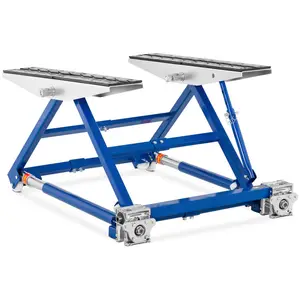
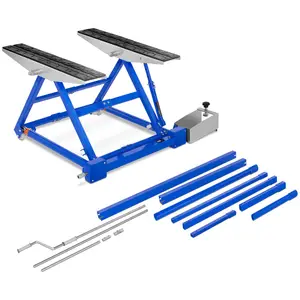
When day-to-day operations involve heavy loads, awkward components, or repetitive lifting, the right platform lifting equipment can transform both safety and efficiency. This category is built around practical, work-ready solutions that help you raise, position, and move goods with confidence, whether you are supporting a busy warehouse, a production area, a service bay, or a packing station.
Our range of lifting platforms is designed to reduce manual handling strain and improve control over load height and placement. Instead of relying on improvised supports or multiple people to lift and hold, you can create a stable working level that suits the task, helping to protect staff, reduce damage to goods, and maintain a smoother workflow.
Across the category, you will find equipment that prioritises stability, predictable lifting performance, and easy operation. Many models are engineered with robust frames, durable platforms, and dependable lifting mechanisms so you can work more accurately when aligning parts, transferring stock, or staging items for dispatch.
Choosing the ideal platform starts with the basics: load capacity, maximum lift height, platform size, and how the unit will be used throughout the day. If you need a fixed lifting point for repeatable tasks, a stationary unit can be the simplest route. If your work moves between zones, mobile options add valuable flexibility without sacrificing strength.
Scissor lift units for smooth height adjustment and ergonomic working
Scissor lift designs are a core choice for controlled, vertical lifting in industrial and commercial environments. Their crossed-arm mechanism supports steady, even raising and lowering, making them well suited to tasks where stability matters as much as lifting power—such as assembly, inspection, pallet handling, and repetitive packing work.
For ergonomic improvements, a scissor-based platform can help bring items up to a comfortable working height, reducing bending and overreaching. That small change can make a big difference over long shifts, supporting better posture and helping to minimise fatigue. It also supports more consistent quality, because operators can focus on accurate handling rather than compensating for awkward lift positions.
Where fine control is required, many setups benefit from incremental height adjustment, allowing you to align loads with benches, conveyors, or shelving levels. If you are building a workstation around lifting performance, our dedicated lift tables provide a purpose-built approach for positioning goods precisely and repeatably, helping to streamline routine handling and improve throughput.
Practical details matter in daily use. Consider how frequently you will lift, whether the platform needs to stay in one place, and how much working surface you need. A spacious platform can support larger cartons or components, whilst a compact footprint may be ideal for tighter production areas. For safety-focused environments, look for features that help maintain stable loading, smooth lowering, and predictable operation even when tasks become fast-paced.
Mobile tilt lift options and hydraulic support for adaptable material handling
When you need to transport loads as well as lift them, mobile units bring clear advantages. With strong castors and manoeuvrable designs, a mobile platform can help you move stock between storage, picking, and packing areas, or bring components directly to a workstation. This reduces unnecessary carrying and supports a more efficient flow of goods across the site.
Mobile tilt lift equipment is especially useful when access and angle matter. Tilting functionality can help present items in a more reachable position, improving visibility and making it easier to pick, sort, or assemble. It is a practical choice for handling loose parts, small packages, or items that need to be decanted, as it can help reduce overextension and speed up repetitive tasks.
Hydraulic lifting technology is valued for its reliable power delivery and straightforward operation. To complement your setup, you may also wish to explore our hydraulic jacks for additional lifting support in maintenance and workshop scenarios, particularly where you need to raise equipment or vehicles independently of platform-based handling.
To get the best long-term performance, match your equipment to the realities of your workspace: floor condition, turning space, typical load shape, and how often the platform will be moved. With the right combination of capacity, lift range, and mobility, you can create a safer, more organised environment—one where goods are handled with control, tasks stay on schedule, and lifting becomes a reliable part of the process rather than a daily challenge.