


Electric Cable Hoists
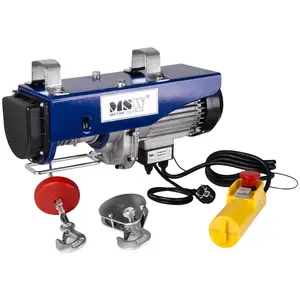

Electric Hoist - 1300 W - 800 kg - 12 m
Lowest price in the 30 days before the discount: €199.00
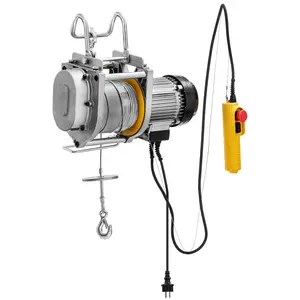
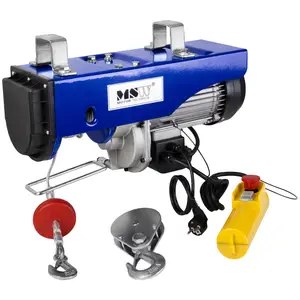
- First
- 1
- Last
Get inspired with expondo blog



Electric cable hoists for dependable lifting and positioning
Electric cable hoists are designed for smooth, controlled lifting where you want power at the touch of a button and confident handling of heavy items. Whether you are moving machinery parts in a workshop, raising building materials on site, or positioning stock in a warehouse bay, these hoists help you work faster while maintaining a steady, repeatable lift. With a motor-driven drum and robust steel wire rope, they are built to handle regular lifting tasks while keeping the load stable and guided.
Within this category you will find practical solutions ranging from compact electric hoist units for occasional workshop jobs to more heavy-duty wire rope hoist set-ups intended for frequent use. Many models are designed around clear, user-friendly controls, allowing you to raise, lower and stop precisely where you need. The aim is simple: reliable lifting performance that supports safer handling and better workflow, without making operation complicated.
Because a cable system offers excellent guidance on the drum, electric cable hoists are especially valued when accurate positioning matters. The wire rope typically runs to a hook with a safety latch, helping keep loads secure during travel. Depending on the model and configuration, you can also integrate a pulley arrangement to change the lifting line, improve lift height options, or adapt the hoist to the space you have available.
For teams that want a neat, professional lifting station, electric cable hoists can be used on suitable structures such as beams, frames or gantries, with controls positioned so the operator can keep a clear view of the load. When you match the right hoist to your working area and routine, you get a lifting solution that feels effortless in use and dependable over the long term.
Choosing an electric hoist or wire rope hoist to match your workload
Selecting the right electric hoist starts with understanding your typical load and how you plan to lift it. Capacity is a key factor, but so are lift height, lifting speed and duty cycle. If your day involves frequent lifting, a wire rope hoist with a strong motor, dependable braking and effective heat management will help maintain consistent performance. For lighter, occasional tasks, a compact electric hoist can provide the convenience of powered lifting without taking up unnecessary space.
It is worth thinking about how the hoist will be mounted and how the lifting line will travel. Some users prefer a fixed point lift for straightforward vertical handling, while others design their set-up so the hook can reach different positions across a work area. The control method matters too: a responsive pendant control can support careful, incremental movement for fitting or alignment tasks, while clear up/down operation suits routine lifting and lowering.
Wire rope hoists are often chosen for their stability and controlled lifting characteristics. The rope winds on a drum in a guided manner, supporting smooth travel and helping reduce unwanted swing. Look for practical safety features such as secure hooks, limit protection to prevent over-travel, and a braking system that holds the load confidently when you release the control. When used correctly within the rated capacity, these details combine to give you a reassuring lifting experience and precise positioning.
If your application is more about pulling a load horizontally or managing rolling resistance along a surface, you may also want to explore electric winches for those specific use cases. And if your environment is better suited to chain-based lifting, for instance where compact vertical lifting with a chain line is preferred, electric chain hoists can be a relevant alternative. However, for many day-to-day lifting stations, electric cable hoists remain a strong choice thanks to their guided rope handling and controlled lift.
Pulleys and safe set-up for electric cable hoists in daily use
Pulleys can significantly expand how you use electric cable hoists. By introducing a pulley block into the rigging, you can change the direction of the lifting line or create a reeved system that adapts the hoist to your task. In practice, a pulley arrangement can help you position the load path more effectively within confined spaces or help you achieve a lifting configuration that better suits your work area. It is also a practical way to tailor the system when you need improved handling for awkward loads, provided the full rigging plan stays within the ratings of every component.
When working with pulleys, it is essential to think in terms of the complete lifting system rather than the hoist alone. The wire rope, hook, attachments and any pulley block must all be suitable for the intended load. A well-chosen pulley can reduce strain on a single lifting line and support more stable lifting, but it must be matched carefully to rope diameter, sheave profile and the way the rope runs under load. Clear routing and correct alignment help the rope wind neatly on the drum and contribute to consistent, predictable operation.
For best results, plan installation so the hoist hangs squarely and the lifting line runs straight whenever possible. The supporting structure must be appropriate and strong enough for the loads involved, including the forces created during starting, stopping and holding. Keep the area beneath the load clear, use the controls from a safe position with good visibility, and avoid side-pulling that can stress the rope and attachments. Regular checks of the wire rope for wear, correct spooling on the drum, and smooth hook operation help maintain performance and extend service life.
Electric cable hoists are most rewarding when they are integrated into a routine that prioritises safe practice and consistent maintenance. With the right capacity and lift height, a sensible pulley set-up where needed, and careful day-to-day use, you gain a powerful lifting partner for workshops, storage areas and job sites. The result is more efficient handling, reduced manual strain, and confident control whenever heavy lifting is part of the work.