


Chemistry Equipment
FILTER


- First
- 1
- Last
Chemistry equipment for reliable everyday laboratory routines
Well-chosen chemistry equipment helps you work with confidence, whether you are preparing solutions, organising samples or setting up a repeatable experiment. This category brings together practical essentials designed to support clear workflows, tidy benches and dependable results. Each item is selected with day-to-day laboratory use in mind: durable construction, sensible proportions and straightforward handling that suits both teaching and routine analytical tasks.
Consistency is the real time-saver in a busy lab. When your vessels sit securely, your tools are within reach and your work height feels comfortable, you can focus on the chemistry rather than improvising your set-up. The products here are designed to integrate smoothly into standard laboratory practices, helping you standardise how you mix, hold, label and store samples across a session.
If you are building a broader set-up or refreshing a teaching room, you can also connect these essentials with other key categories. Our range of laboratory equipment makes it easy to expand from core bench items into a complete, coherent workspace, while keeping the look and functionality aligned across your lab.
Good laboratory organisation is not only about speed, but also about safety and repeatability. Stable supports reduce the chance of spills, clearly visible graduations help prevent dosing errors, and tidy sample handling lowers cross-contamination risks. With the right basics in place, you create a calm, methodical environment where students and professionals alike can concentrate on correct technique.
Laboratory beaker and test tube rack essentials for mixing and sample handling
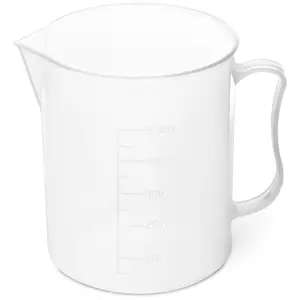
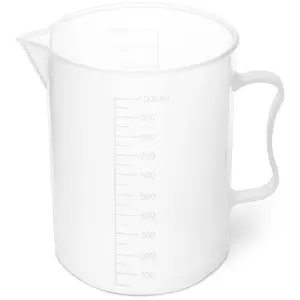
A laboratory beaker is a true workhorse: ideal for dissolving solids, preparing buffers, diluting concentrates and performing general mixing tasks. The beaker’s shape supports controlled stirring and easy observation, and a well-designed lip or spout helps with cleaner pouring and fewer drips. Whether you are working in small volumes for demonstrations or larger batches for routine preparation, having the right beaker sizes available helps keep measurements practical and reduces unnecessary transfers.
Durability and readability matter in day-to-day use. Clear markings aid quick approximations during preparation, and robust construction supports repeated cleaning and handling. For many workflows, it is also helpful to keep multiple beakers on hand so you can separate reagents, prepare blanks and retain a reference solution without disrupting your bench space.
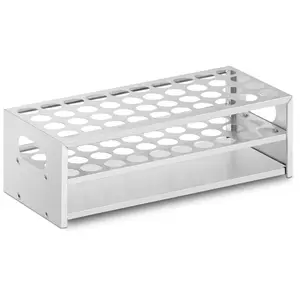
For sample organisation, a test tube rack brings structure to what can otherwise become a cluttered workspace. By holding tubes upright and spaced, racks help prevent accidental knock-overs, make labelling easier to see at a glance, and keep sequential samples in order. This is especially valuable during class practicals, batch testing or any workflow where you need to move through a series of timed steps.
A good rack supports both efficiency and cleanliness: tubes can be loaded and unloaded quickly, the bench stays clearer, and your hands are less likely to brush against neighbouring samples. When paired with beakers for reagent preparation, racks help you maintain a neat “prep and dispense” rhythm—mix in the beaker, then distribute to tubes that are already correctly arranged.
If your work includes volumetric procedures and controlled additions, you may wish to complement these core items with titration equipment. Used alongside beakers and well-organised tube handling, it supports a more structured approach to solution preparation, endpoint work and repeatable bench routines.
Laboratory stand and laboratory stool solutions for stability, comfort and control
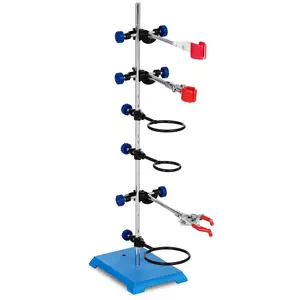
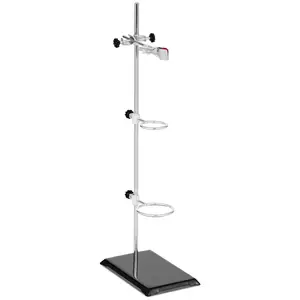
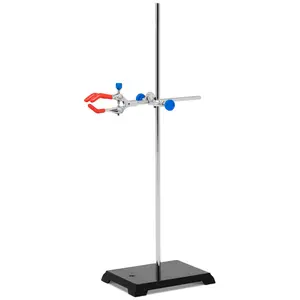
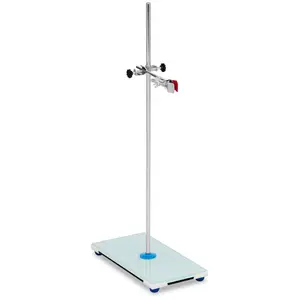
A laboratory stand is central to many classic laboratory set-ups, from supporting vessels and accessories to keeping processes stable during observation. A well-built stand provides a strong base and dependable vertical support, making it easier to position equipment at the correct height and angle. This controlled positioning can reduce strain, improve visibility and help you keep your hands free for careful additions or adjustments.
In practical terms, stands help you create consistent layouts. Instead of balancing items at the edge of a bench or improvising with stacked equipment, you can build a repeatable arrangement that is easier to demonstrate, replicate and supervise. This can be especially useful in teaching environments, where clear, stable set-ups help learners follow safe technique step by step.
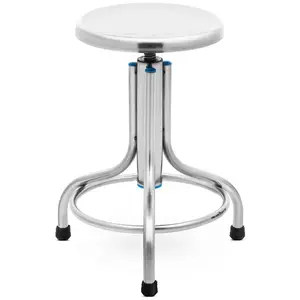
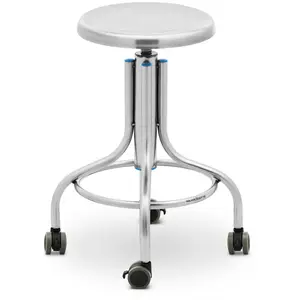
Comfort plays a bigger role in accuracy than many people expect. A laboratory stool supports better posture during longer sessions and helps you maintain a steady working position for tasks such as note-taking, labelling, timed observations or careful dispensing. With an appropriate working height, you reduce fatigue and keep fine movements more controlled—an advantage whenever precision and concentration matter.
When you combine supportive seating with stable stands, you create a bench space that feels purposeful and easy to manage. Movement becomes smoother, items are less likely to be knocked, and you can keep tools and samples arranged logically around you. The result is a more professional working environment that supports reliable results as well as day-to-day wellbeing.
To round out your bench set-up beyond the essentials here, our selection of laboratory devices can help you add further capability for routine laboratory tasks. Together with sturdy stands, practical seating and organised sample handling, they contribute to a workspace that is efficient, orderly and ready for the demands of regular chemistry work.